Case study
Peterborough Gas CRM & Customer Lifecycle Automation
A complete SalesLion CRM operating structure built on GoHighLevel and LeadConnector to manage enquiries, customer records, recurring services, renewal follow-up, billing and operational visibility.
V1
CRM implementation
Implemented
2
Operational pipelines
Configured
4
Core service journeys
Structured
4
Renewal touchpoints
Automated
Business context
Why the project mattered
Peterborough Gas needed more than a place to store customer details. The business required a practical operating system for managing enquiries, completed work, recurring services, customer follow-up, payments and day-to-day visibility.
Customer information and service records needed to support both immediate work and future revenue. A completed boiler service or landlord gas safety certificate was not simply a closed job; it also created a future renewal requirement that needed to remain visible and actionable.
The project focused on establishing a scalable CRM foundation that could support the owner immediately while also creating a structure that a future administrator or additional team member could operate.
Problem statement
What had to improve
Peterborough Gas needed more than a place to store customer details. The business required a practical operating system for managing enquiries, completed work, recurring services, customer follow-up, payments and day-to-day visibility.
Fragmented customer information
Customer details, property information, service history and future renewal requirements needed to be brought together within a consistent CRM record.
Unstructured enquiry handling
Enquiries could arrive through the website, phone, email, WhatsApp or social channels, but there was no single operational process for capturing, progressing and closing them.
Manual renewal management
Boiler servicing and landlord gas safety work created recurring revenue opportunities, but future due dates, reminders and follow-up actions were difficult to manage consistently.
Limited operational visibility
The owner needed a clearer view of active enquiries, upcoming renewals, outstanding actions, invoices and payments without moving between disconnected systems.
Discovery & analysis
How the operating model was understood
Before configuring the CRM, the work focused on understanding how Peterborough Gas actually operated: how customers made contact, what information was needed for each service, how completed work was recorded, and what needed to happen before the next service became due.
- New enquiries required different information depending on whether the customer needed a boiler service, landlord gas safety certificate, boiler repair or new boiler installation.
- A customer's home address could differ from the serviced property address, particularly for landlords, so the data structure needed to support property-based geographic segmentation.
- Completed services needed to generate future renewal dates and place the customer into the correct follow-up journey.
- Customer reminders alone were not sufficient; internal tasks and notifications were also required so the business could proactively call customers.
- The CRM needed to remain simple enough for daily use while supporting future delegation to an administrator or additional employee.
- Billing and payment information needed to sit alongside customer and operational activity.
Analysis method
The discovery process translated day-to-day business activity into contact fields, forms, pipeline stages, workflow conditions, timing rules, internal actions and reporting requirements.
Solution overview
What was built and why
A complete CRM operating structure was designed and implemented within SalesLion using GoHighLevel and LeadConnector functionality.
The system connects public enquiry capture, internal service recording, contact management, opportunity pipelines, recurring customer follow-up, Stripe billing and dashboard reporting.
The objective was not to automate every possible activity. It was to create a reliable operational foundation that reduced avoidable administration, protected recurring service opportunities and gave the owner a clearer view of what required attention.
CRM foundation: custom fields, tags, service information, property data and customer segmentation.
Enquiry operations: conditional form capture and a dedicated pipeline from initial enquiry to completed work.
Existing customer management: service-completion recording, renewal opportunities and timed follow-up stages.
Billing visibility: invoice generation, payment tracking and revenue reporting through Stripe-connected CRM tools.
Architecture
CRM operating architecture
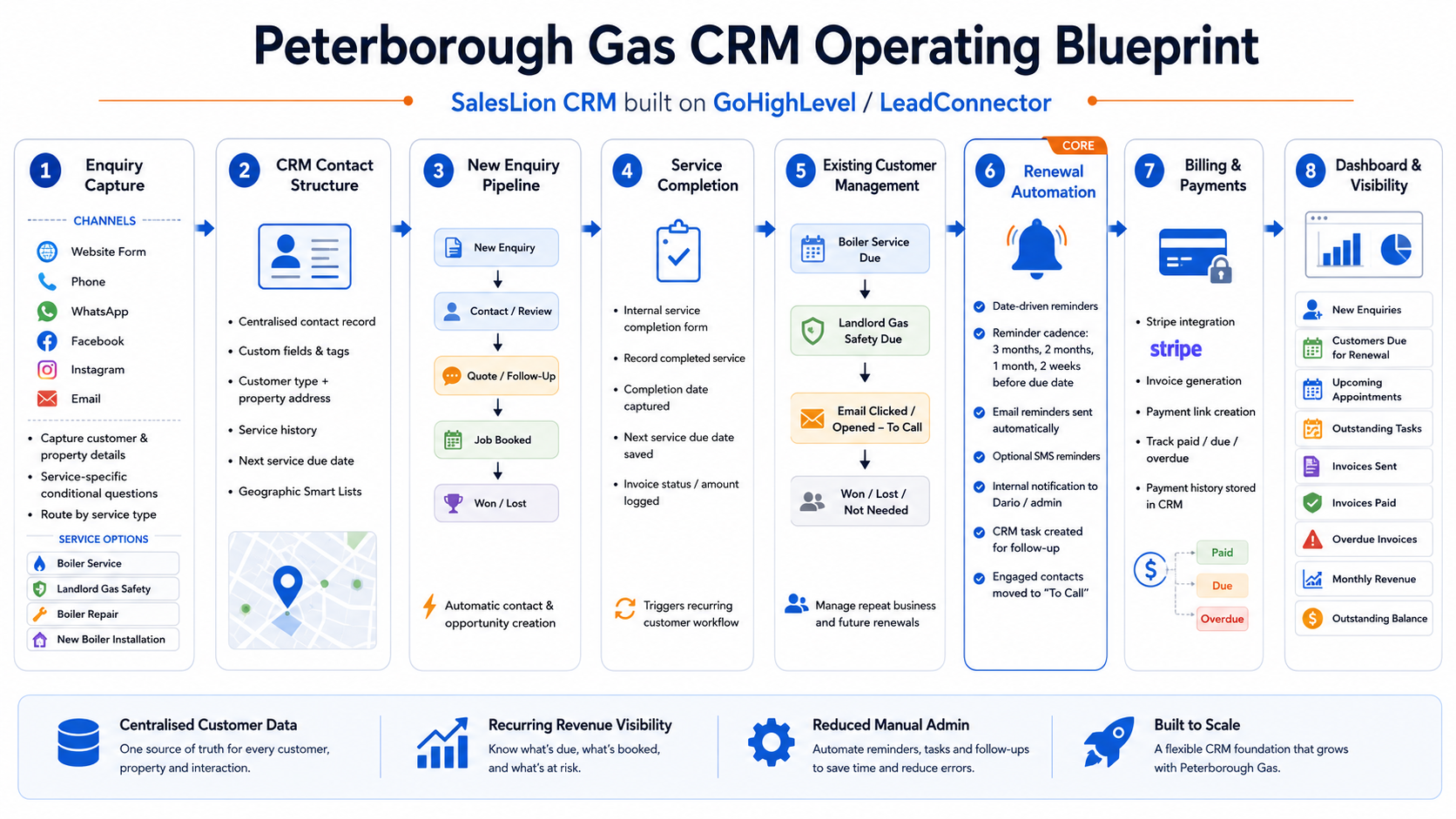
The operating blueprint connects the complete customer lifecycle from first enquiry and CRM record creation through service delivery, recurring renewal management, billing and management reporting.
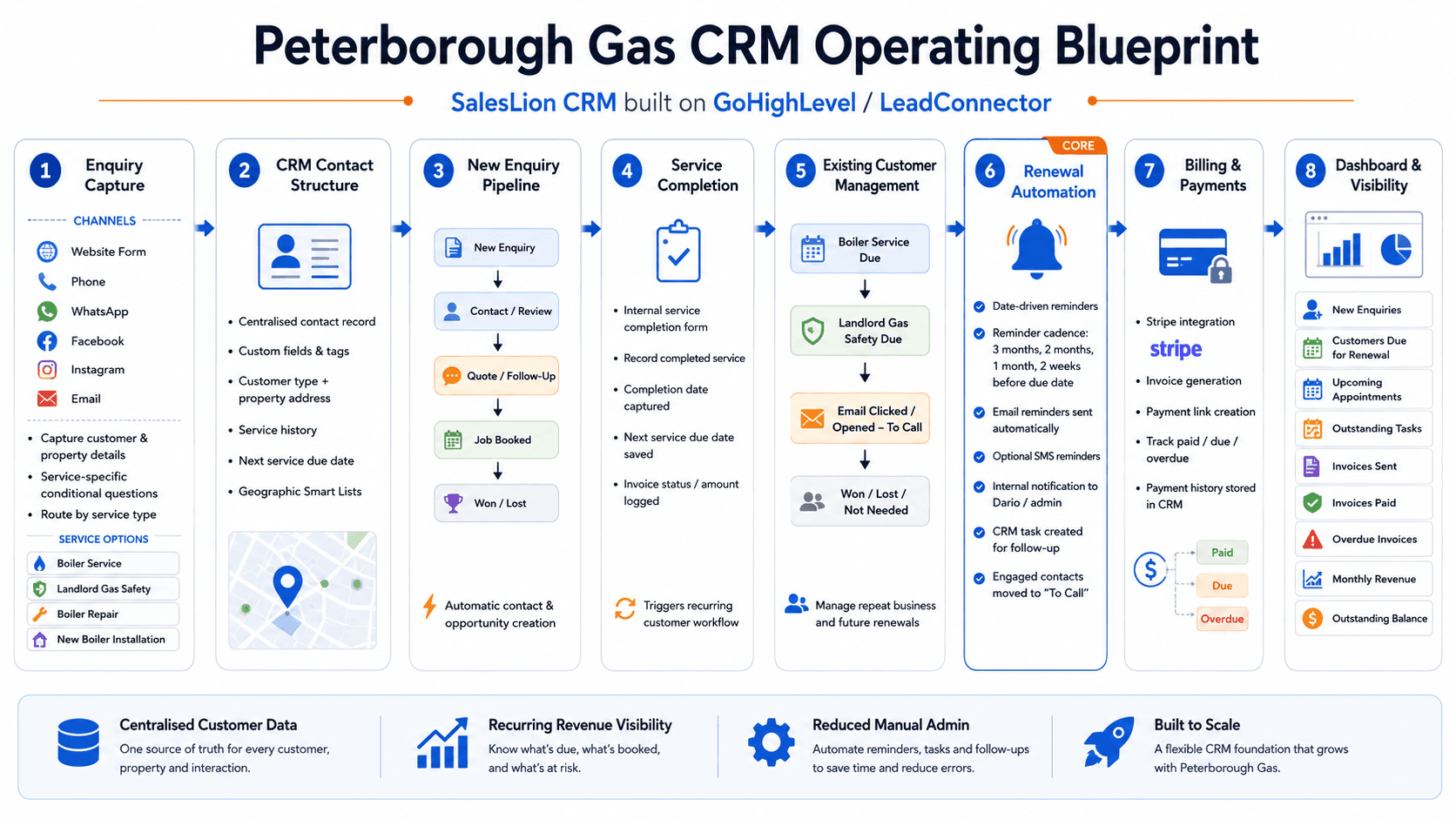
The CRM operating blueprint shows how enquiries, customer data, pipelines, completed services, renewal workflows, payments and reporting were connected into one operating structure.
Implementation
Implementation Journey
Tools used
SalesLion CRM, GoHighLevel, LeadConnector, Stripe
Step 1
Operational workflow review
Mapped how enquiries entered the business, what information was required for each service, how jobs progressed and how recurring service opportunities were managed.
Step 2
CRM and data architecture
Structured contact records, custom fields, tags, customer types, property information, service dates and geographic segmentation rules.
Step 3
Forms and pipeline configuration
Built the public enquiry form, internal post-work completion form and dedicated pipelines for new enquiries and existing customer renewals.
Step 4
Customer lifecycle automation
Configured service-based routing, renewal-date logic, timed reminders, opportunity updates, internal notifications and follow-up actions.
Step 5
Billing, testing and validation
Connected Stripe billing functionality, validated invoice and payment tracking, tested workflow behaviour and confirmed that CRM records, opportunities and reporting updated correctly.
Evidence
Evidence gallery
The screenshots below demonstrate the implemented enquiry process, CRM pipelines, service-completion workflow, renewal automation, customer records, billing activity and reporting structure.
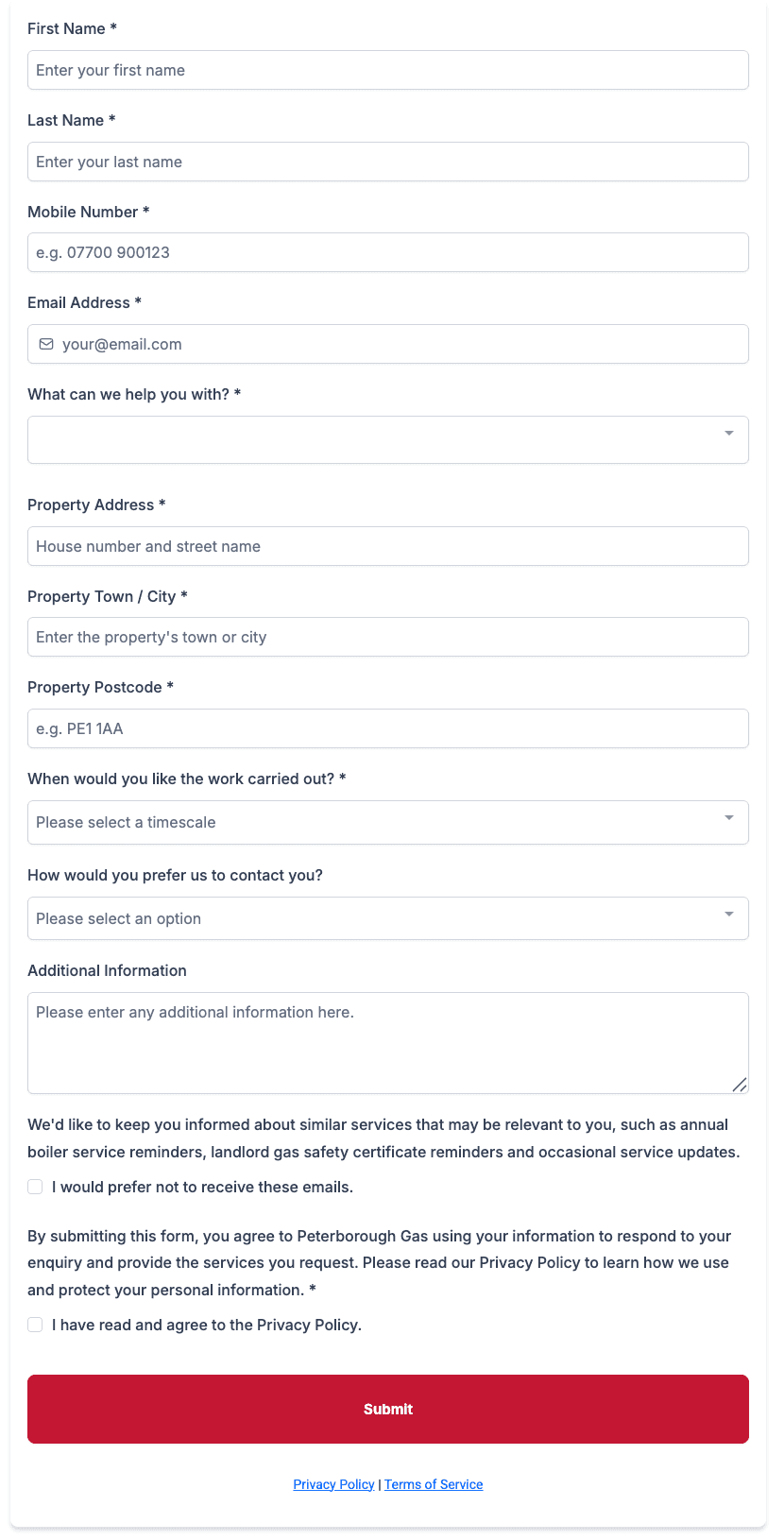
Structured New Enquiry Form
A public enquiry form captures customer, property, service, preferred timescale and contact information before the enquiry enters the CRM. Marketing preferences and privacy-policy acknowledgement are incorporated into the submission process.

New Enquiry Pipeline
A dedicated pipeline provides a consistent operational journey from New Enquiry through Contacted, Quote Sent, Job Booked, Job Completed or Lost.
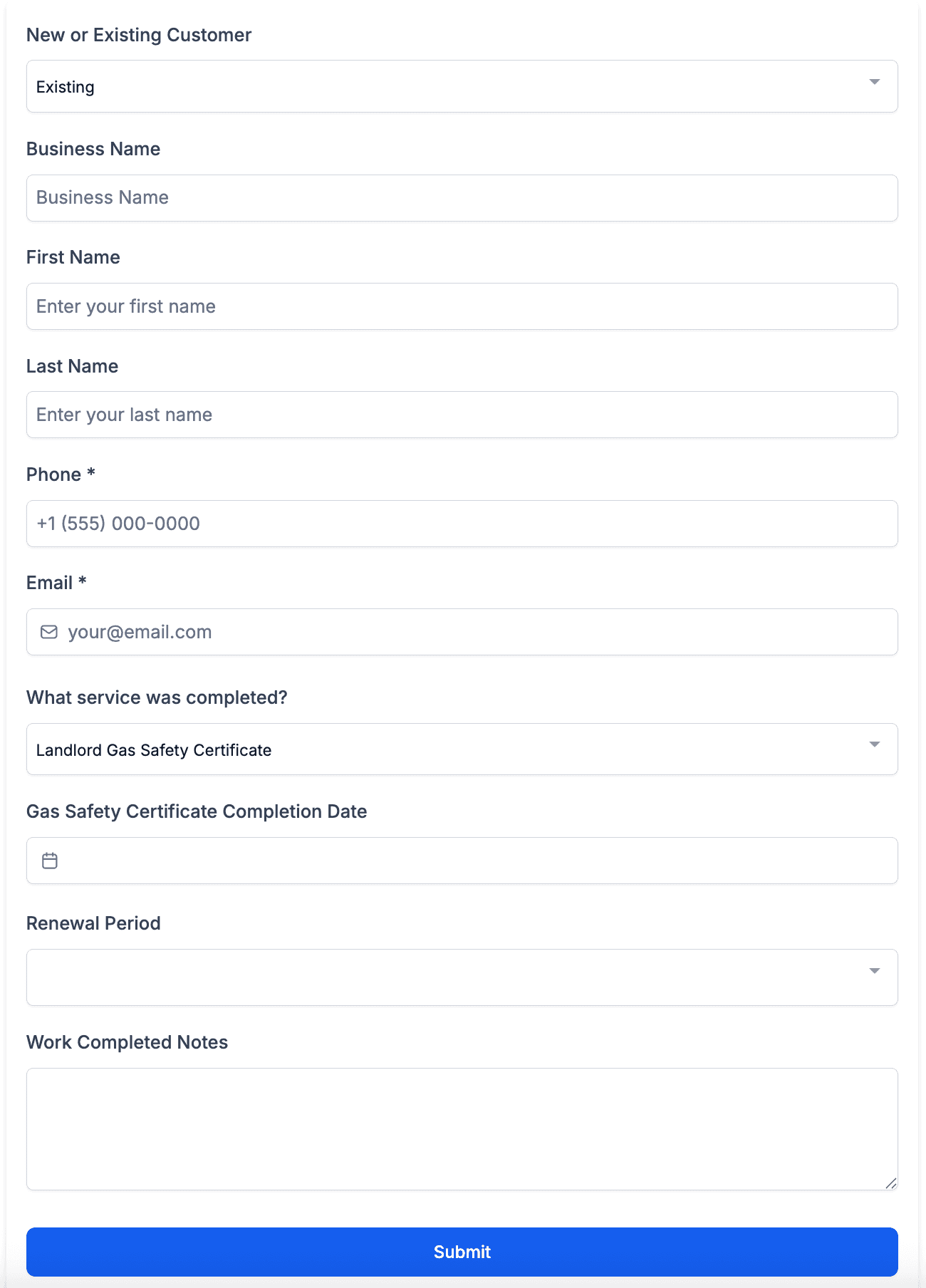
Post Work Completion Form
An internal form records the customer, completed service, completion date, renewal period and work notes. This submission converts completed work into structured CRM data and initiates the relevant recurring-service process.
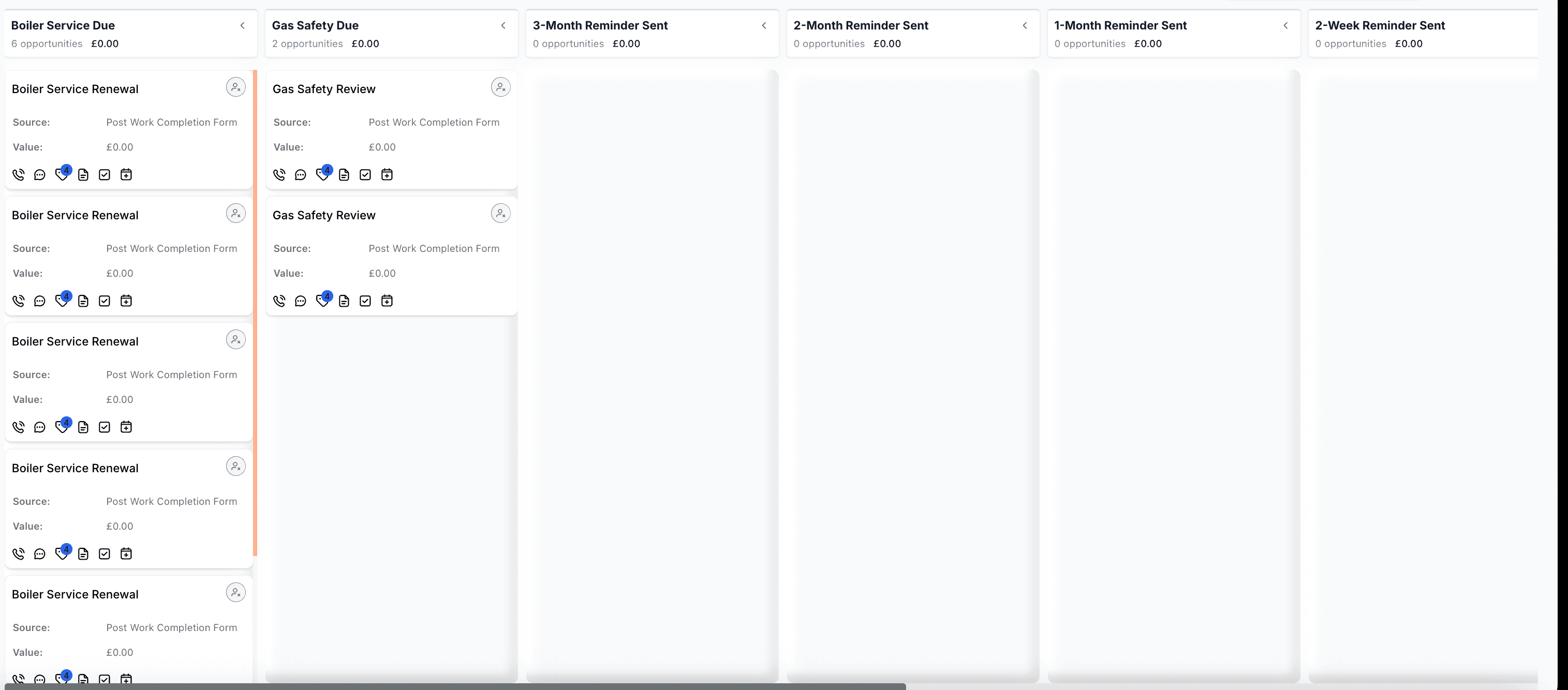
Existing Customer Renewal Pipeline
A separate pipeline tracks boiler services, gas safety certifications and each stage of the reminder cadence, giving the business visibility over future work and customer follow-up.
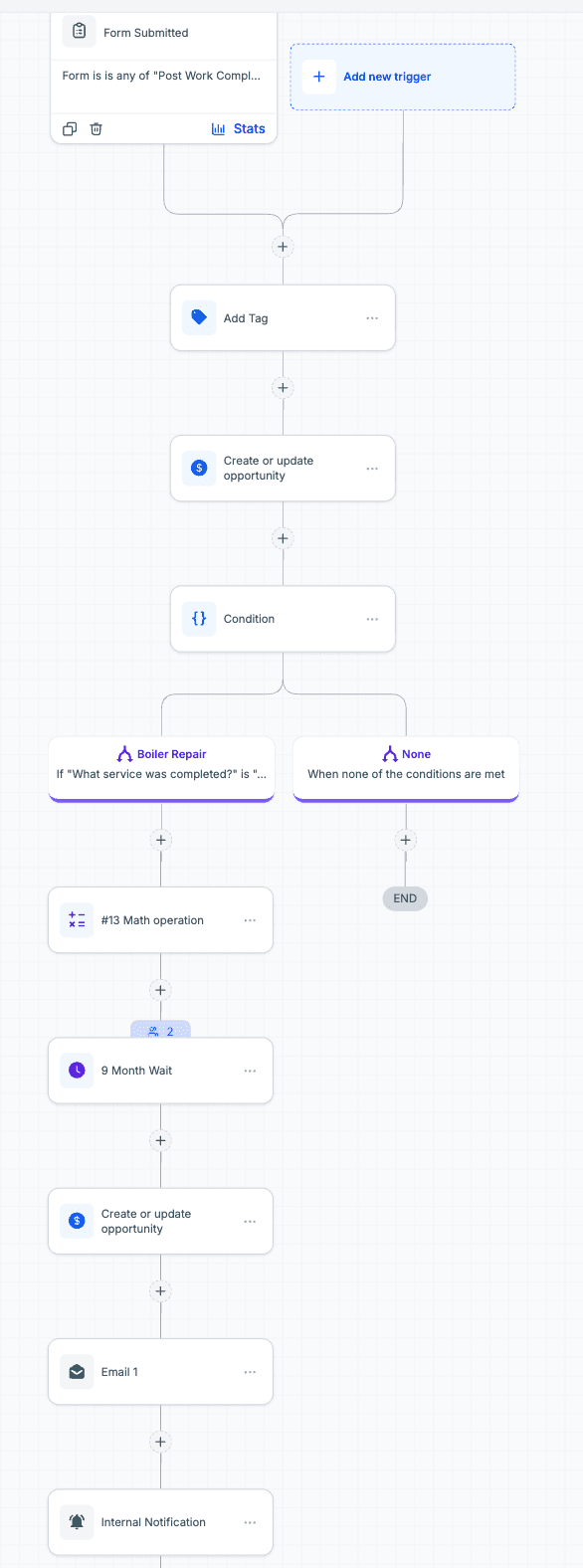
LeadConnector Renewal Automation
The workflow applies service tags, creates or updates renewal opportunities, uses conditional routing, calculates timing, waits until the required reminder point, sends communications and generates internal notifications.
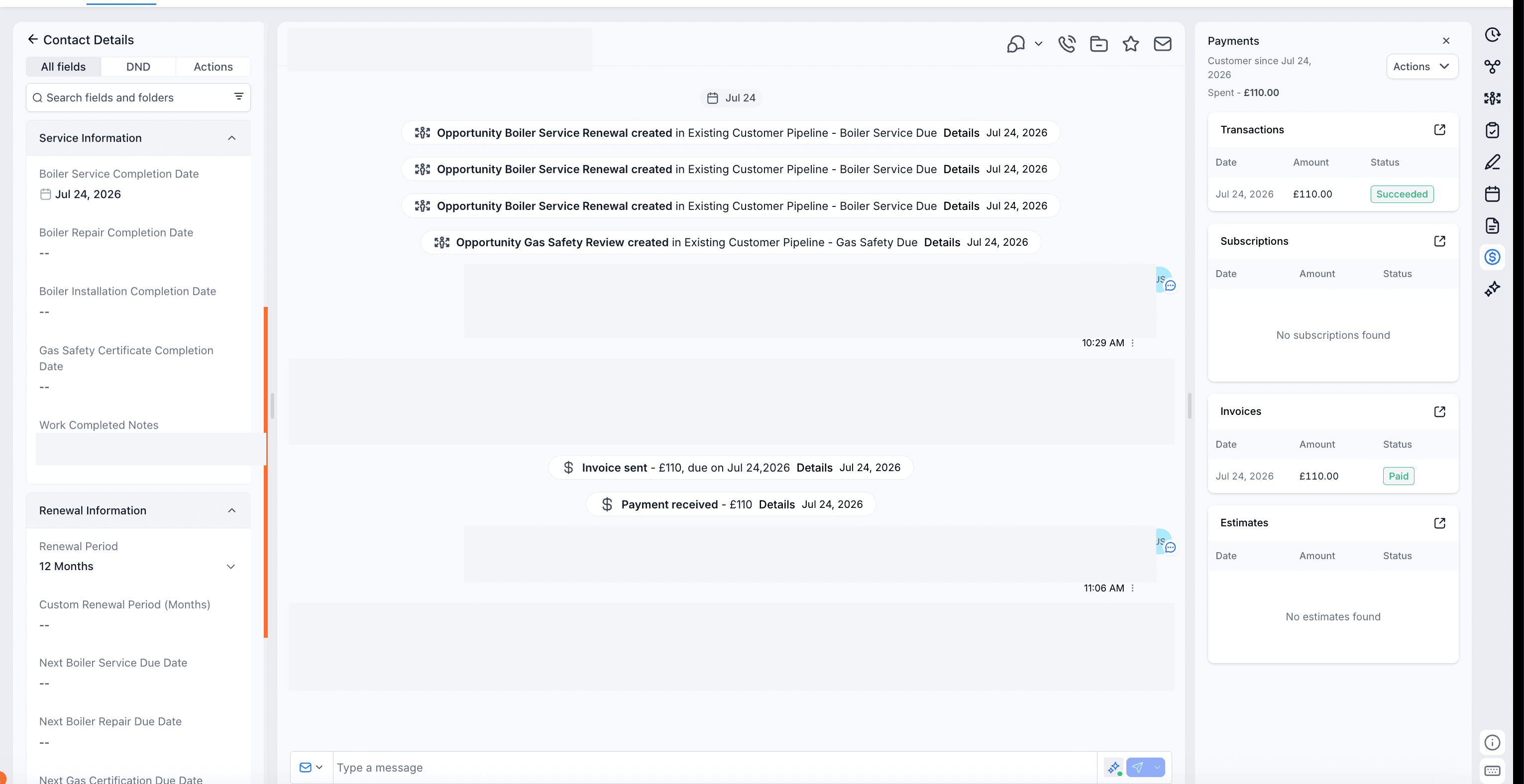
Centralised Contact and Payment Record
The contact view brings together service information, completion dates, renewal periods, workflow activity, invoices, payments and communication history within a single operational record.
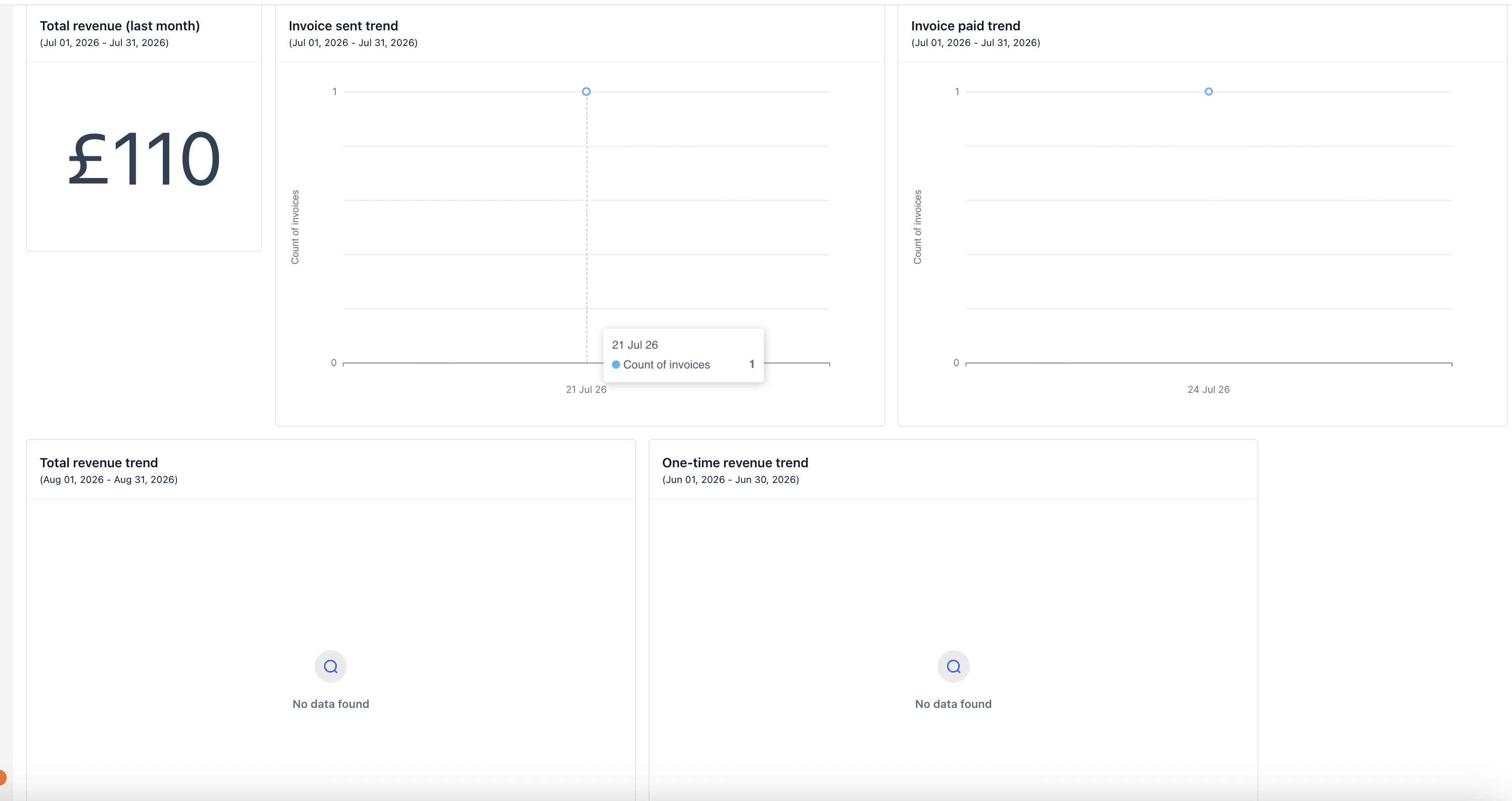
Finance and Invoice Reporting
Test billing data was used to validate revenue reporting, invoices sent and payments received before wider operational use.
Outcomes
Outcomes and impact
The project replaced a collection of disconnected operational requirements with a structured CRM foundation covering the full customer lifecycle.
Before
- Enquiries did not follow one consistent operational path.
- Customer, property and service information was not structured around future workflow requirements.
- Repeat services and certifications depended heavily on manual follow-up.
- Operational activity, billing and payments lacked a single consolidated view.
- The system was not yet structured for delegation to future administrative support.
After
- New enquiries enter a defined pipeline with consistent customer and property information.
- Completed work is recorded through an internal form and converted into future renewal activity.
- Boiler service and landlord gas safety follow-up is managed through date-driven opportunities and reminders.
- Internal notifications and CRM actions give the business ownership of proactive customer follow-up.
- Contact records bring together service history, renewal information, communications, invoices and payments.
- The CRM provides a scalable structure that can support the owner today and additional staff later.
Metrics
V1
CRM implementation
Implemented
2
Operational pipelines
Configured
4
Core service journeys
Structured
4
Renewal touchpoints
Automated
Outcomes
The CRM now provides a defined operating process for moving customer information from enquiry through completed work and into future service management.
Recurring work is no longer treated as an informal future reminder. Completion dates and renewal periods are used to create visible opportunities, timed communications and internal follow-up actions.
Billing and payment activity can be viewed alongside the customer record, creating a more connected view of operations and revenue.
Does your CRM reflect how your business actually operates?
Book a discovery callLessons
Lessons learned
CRM design must begin with operations
The most useful CRM structure came from understanding how work entered, moved through and returned to the business, not from accepting the platform's default fields and pipelines.
Completed work should create future action
For recurring services, closing today's job is also the beginning of the next customer lifecycle. Completion data therefore needed to trigger future visibility and follow-up.
Customer reminders need internal ownership
Automated communications support the customer, but internal tasks and notifications ensure the business remains responsible for converting renewal opportunities into booked work.
Scalability depends on clarity
A system that works only inside the owner's head is difficult to delegate. Clear forms, fields, pipelines and actions create a structure that future team members can follow.
Future
Future enhancements
The V1 implementation establishes the operational foundation. Future improvements can be added once sufficient live usage data and business requirements are available.
Online appointment scheduling
Expanded SMS communication
Xero synchronisation
Additional geographic Smart Lists
Service and renewal conversion reporting
Automated overdue-invoice follow-up
Additional staff roles and task ownership
Customer reactivation and local marketing campaigns
More work
Explore more work
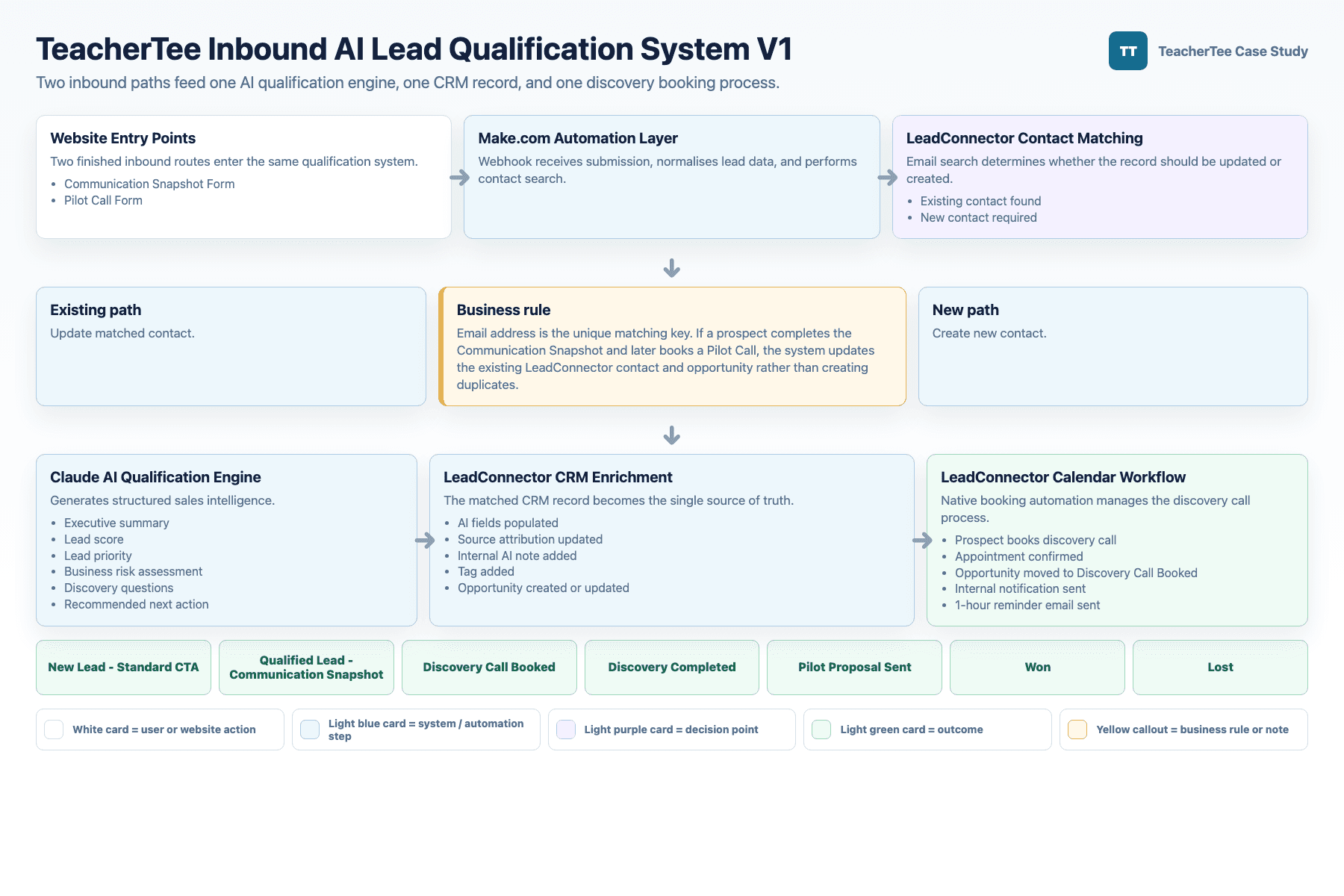
AI SALES OPERATIONS
TeacherTee AI Lead System
An AI-powered inbound qualification workflow built with Make.com, LeadConnector, and Claude to enrich lead context, prioritise enquiries, and support better sales conversations.
View case study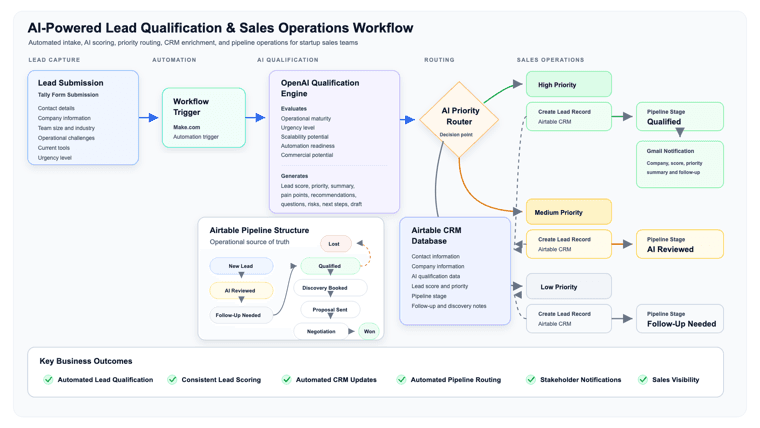
Operations workflow
Lead Qualification Workflow
An end-to-end AI-powered lead qualification and sales operations workflow built with Tally, Make.com, OpenAI, Airtable, and Gmail.
View case study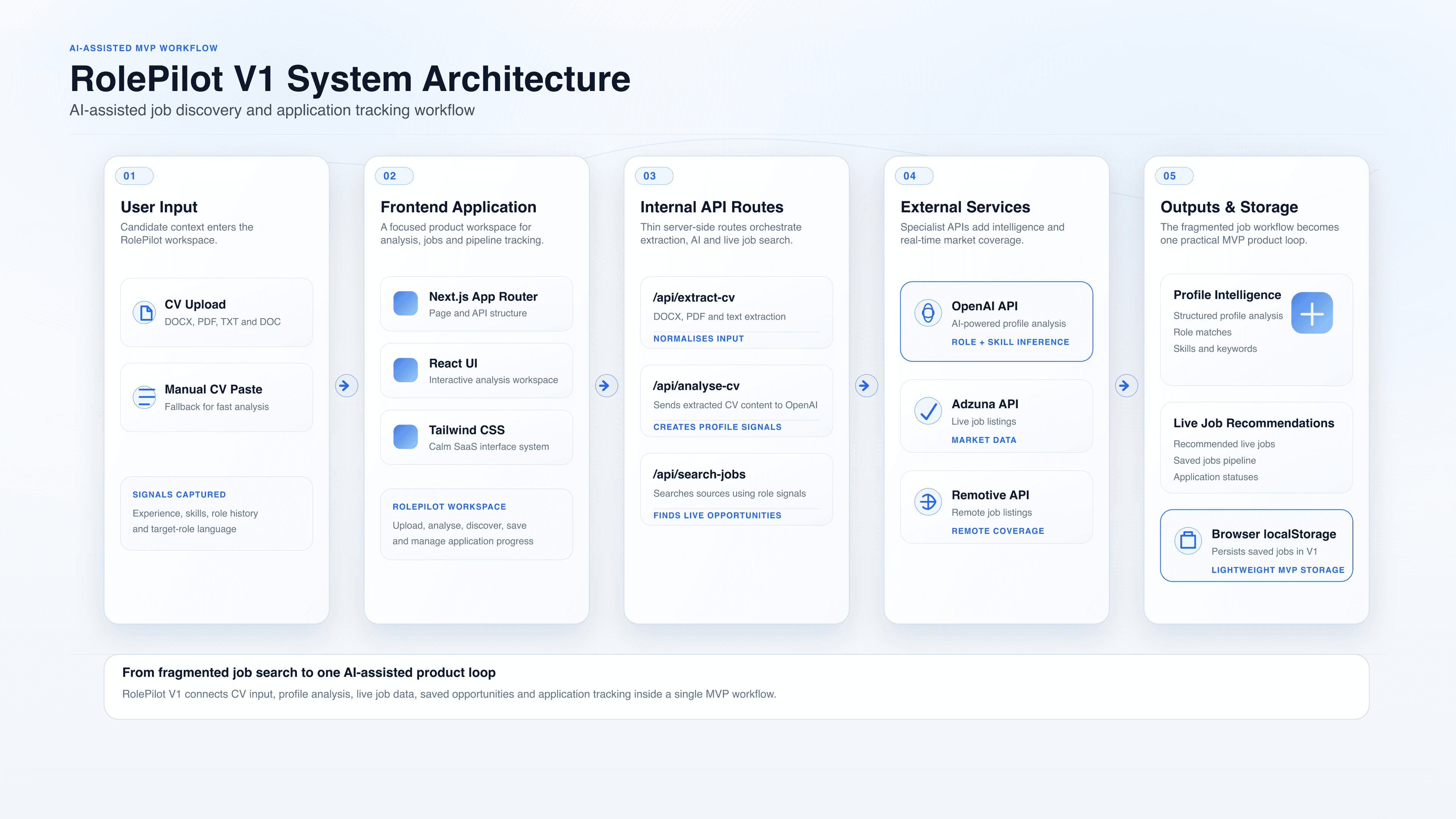
Product system
RolePilot V1
RolePilot is an AI-powered job matching and application tracking platform designed to reduce the friction involved in modern job searching.
View case studyLet’s Talk About Your Operations.
If this project resembles a process inside your business, a discovery call can explore AI operations, workflow automation, CRM design, sales operations improvement, or process optimisation.